© Schnepp Renou

© Schnepp Renou

© Schnepp Renou

© Schnepp Renou
Since its construction in 1822, the Canal de l’Ourcq has witnessed countless transformations. From farmland to capital, from Paris to Greater Paris, from industrial shifts to cultural metamorphoses, from labor to leisure, its banks confirm the old adage that one never bathes in the same river twice. In this era of metropolitan integration, the canal continues to serve as a guiding thread for the city’s reinventions. In Pantin, just before the ring road, it borders major converted landmarks such as the Centre National de la Danse (formerly the central police headquarters) and the Grands Moulins (BNP Paribas offices). Beyond the périphérique, it flows past the architectural follies of Parc de la Villette.
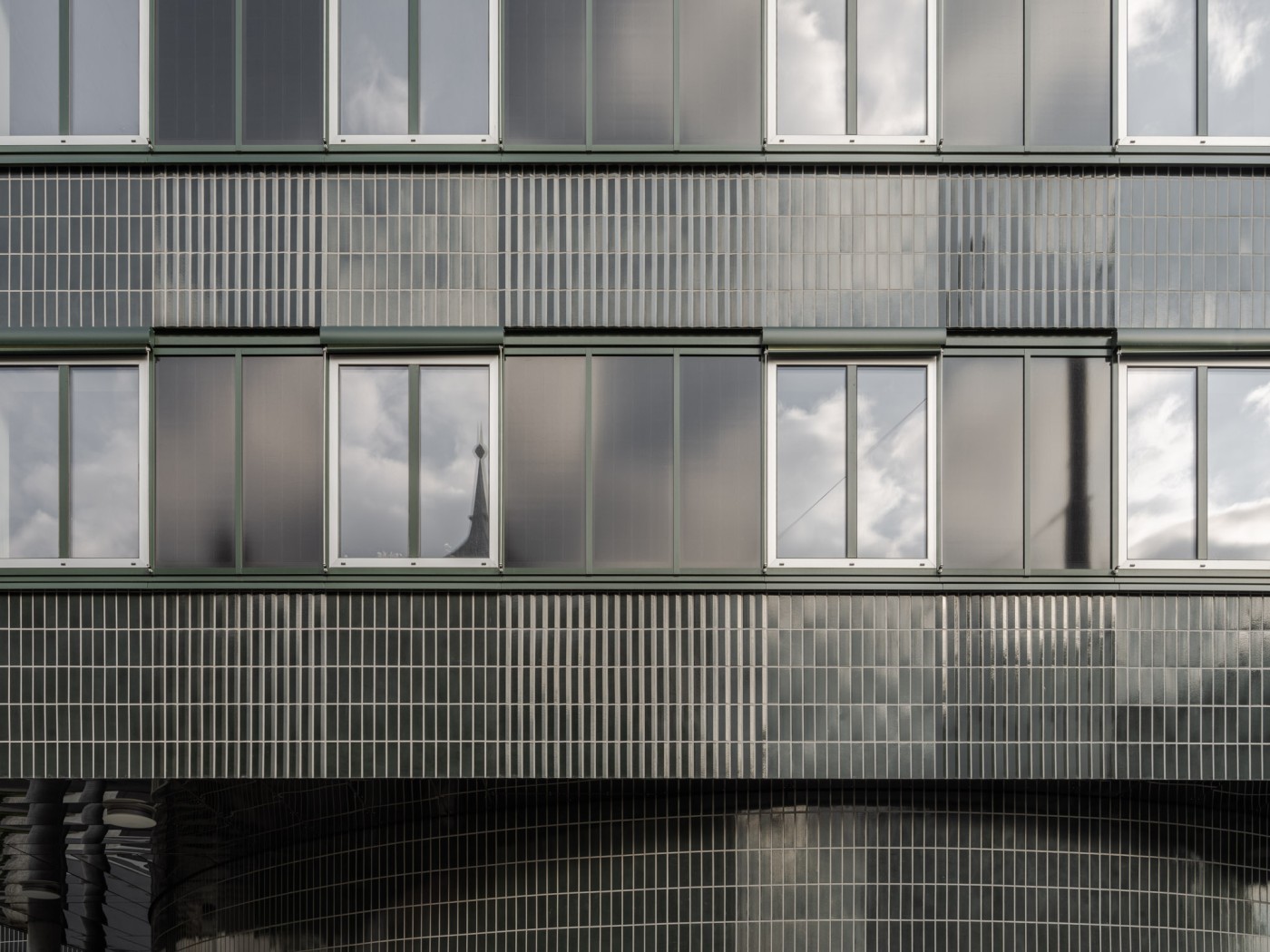
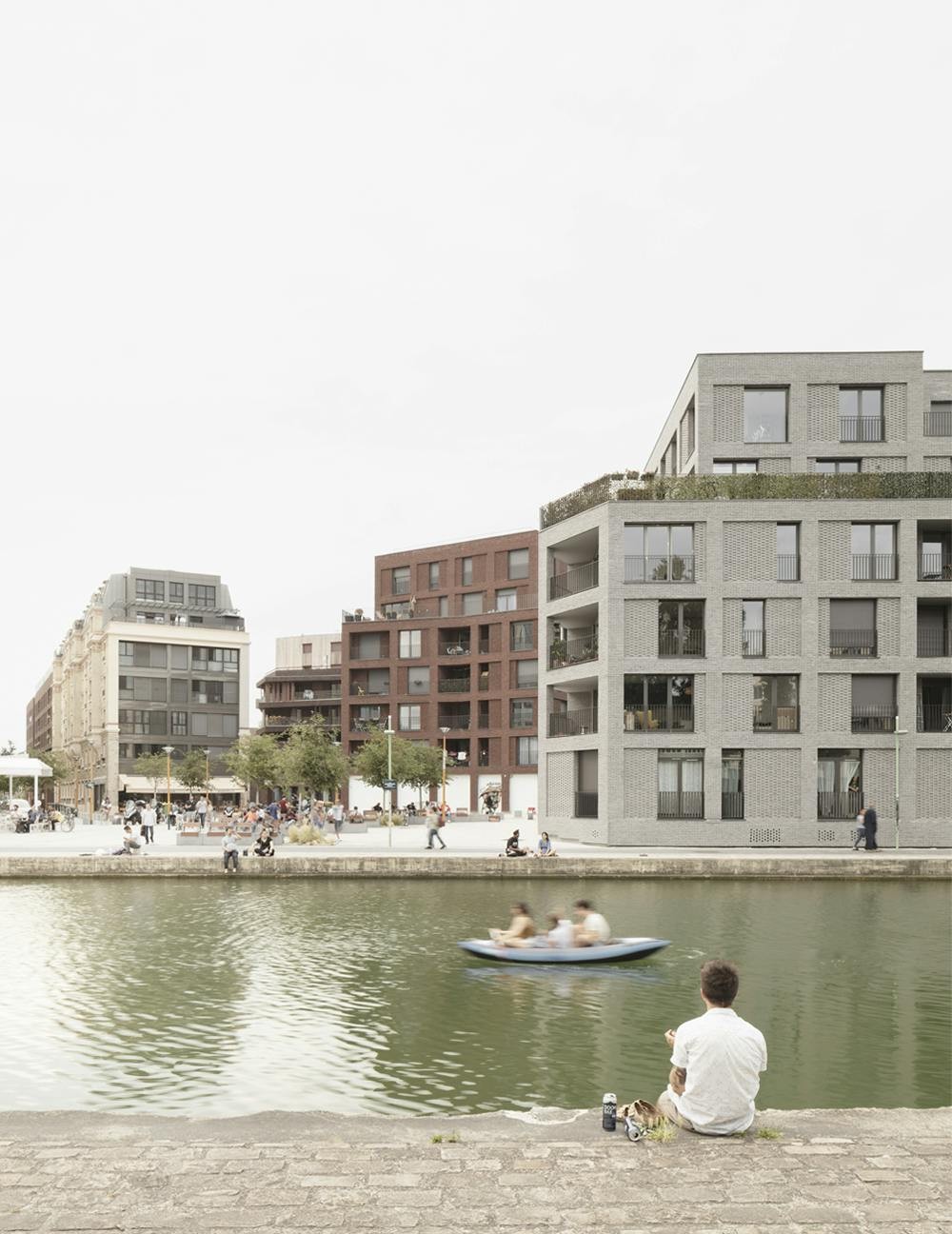
The Avenier Cornejo project for Emerige is located precisely here — on the square below a bridge linking Pantin’s City Hall and Train station to Rue Hoche and the Line 5 metro. Building on this exceptional location, rich industrial heritage, and a constant dynamic of movement, the architects based their approach to the master plan on the idea of fragmentation and openness. Instead of two buildings, as originally planned by the developer, they chose to divide the program into three volumes arranged in a half-star configuration around the square. This gesture reinforces the site’s role as a local center, gives each building a distinct address, and opens up a shared garden between them — a generous green space visible both from the canal and from the square, creating a pleasant visual corridor. The three buildings are deeply anchored in their complex urban and landscape context, forming a conscious dialogue with the surroundings of the Grands Moulins de Pantin development zone. Each apartment benefits from loggias, terraces, or balconies that extend living spaces outward, maintaining a strong connection with the exterior and offering striking views toward the Geode’s metallic sphere in the distance. Paying tribute to Pantin’s industrial heritage, the façades are cladded in solid brick with recessed joints — a material that is both contemporary and evocative of the city’s manufacturing past. Each building bears a different hue — anthracite gray, light gray, and red — giving them individuality while preserving the unity of the whole. The choice of brick also reflects the project’s ecological awareness, as it ensures durability and environmental performance. Windows, shutters, and balcony railings are crafted in aluminum, each with a unique metallic finish to complement the façades. The apartments are designed with simple, efficient layouts, abundant natural light, and optimal orientations, while meeting the quality standards defined by Emerige, which places special attention on refined entrance halls that convey both elegance and solidity. Ground-floor units open onto large private terraces that extend into the shared garden, transforming their position into a distinct advantage. To promote soft mobility, easily accessible bike and stroller rooms are integrated into the design. Three existing mature trees were preserved on the site, providing instant greenery for residents upon delivery. The landscaping introduces robust, low-maintenance native species, chosen for their root systems and growth patterns, and includes pollinator-friendly, low-allergen plants — encouraging biodiversity while minimizing nuisances for neighbors.